

Every business in Dubai with a website eventually faces the same budget conversation. You have money to spend on digital marketing. You know you need to be visible online. And someone, whether it is an agency pitching their services, a competitor who seems to be everywhere on Google, or a marketing article you read at midnight, has convinced you that either SEO or PPC is the answer.
Here is the honest truth that most agencies are not incentivised to tell you. Neither is universally the answer. Both have genuinely different strengths, genuinely different timelines, and genuinely different risk profiles. And the right choice for your Dubai business depends on specific factors about your situation that have nothing to do with which channel is theoretically superior.
This guide gives you the complete, unbiased breakdown. What SEO and PPC each actually deliver in the UAE market in 2026, where each one wins, where each one falls short, what they cost, and how to build a strategy that uses both intelligently rather than betting everything on one or the other and hoping for the best.
Key Takeaways
- PPC delivers faster visibility but SEO delivers more durable returns: PPC can put you on page one of Google tomorrow. SEO takes months to build but the traffic it generates continues without ongoing spend.
- Dubai's digital advertising market is expensive, which changes the PPC calculus significantly: CPCs in competitive Dubai categories can be among the highest in the world, which means PPC ROI depends heavily on conversion rate and average transaction value.
- SEO and PPC are not competing strategies, they are complementary ones: The most sophisticated digital marketing programs in Dubai use both, deploying PPC for immediate needs and SEO for long-term compounding returns.
- The right starting point depends on your business stage, budget, and timeline: A startup that needs leads this quarter has different needs from an established brand investing in five-year market dominance.
- Choosing the right SEO agency or PPC agency in Dubai matters as much as choosing the right channel: Mediocre execution of either channel wastes budget faster than the channel-choice question ever could.
- Arabic language capability is essential for both SEO and PPC in the UAE: Brands targeting the Arabic-speaking UAE audience need bilingual strategy across both channels to capture the full market opportunity.
What Is SEO and What Does It Actually Deliver?
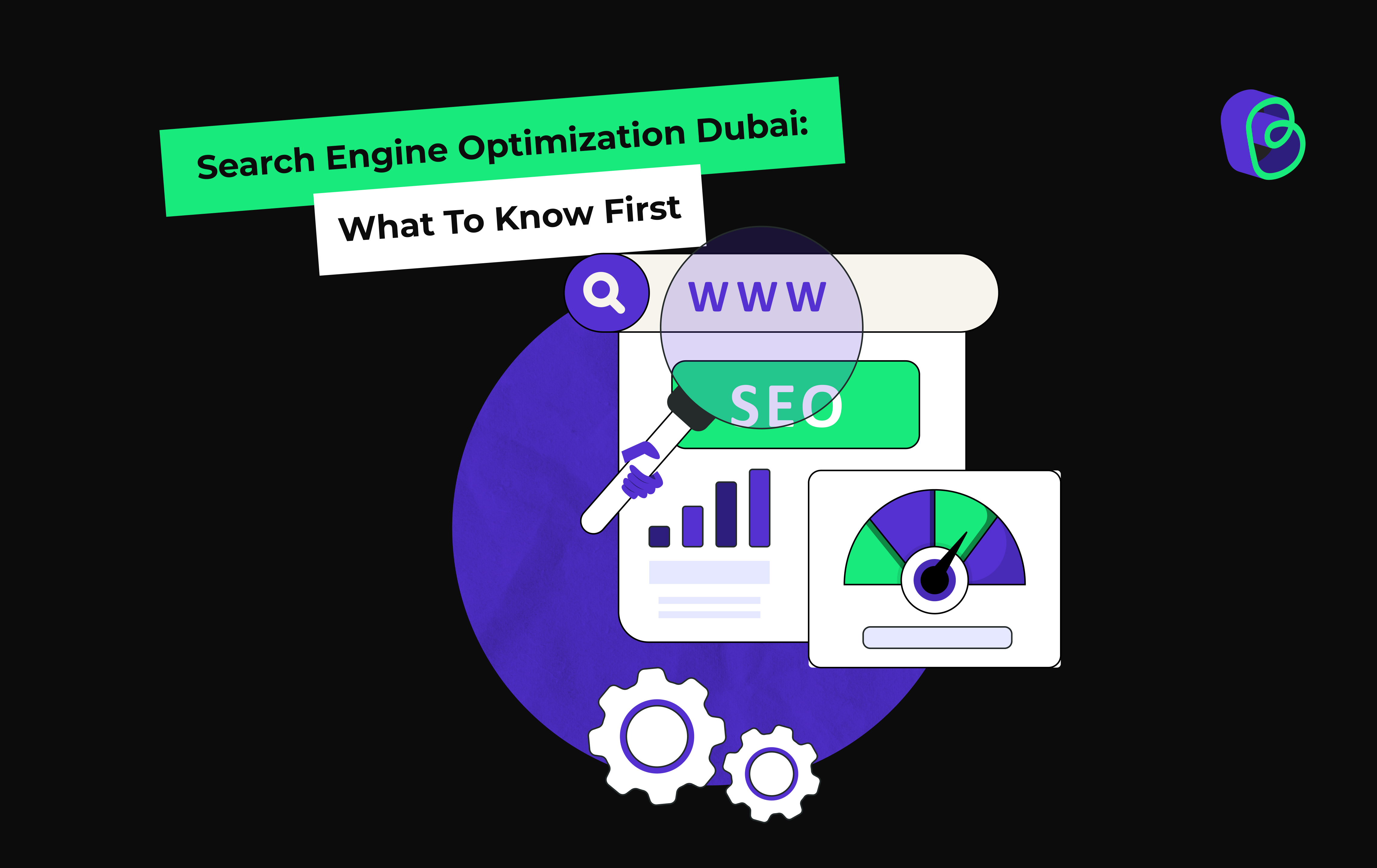
Search engine optimization is the practice of improving a website's visibility in organic, unpaid search results. When someone in Dubai searches for "best accounting software UAE" or "interior design company Dubai" and clicks on a result that is not a paid ad, they have arrived via organic search, and SEO is what determines whether your website appears in those results.
The fundamental commercial appeal of SEO is the cost structure. Once you have built strong organic rankings, the traffic those rankings generate arrives without a cost-per-click attached to it. A page ranking in position one for a high-volume keyword in Dubai can generate hundreds or thousands of visitors per month, every month, without additional spend. That is the compounding effect that makes SEO so attractive over a multi-year horizon.
The significant limitation of SEO is time. Building meaningful organic rankings in competitive Dubai categories takes months of consistent investment in technical optimisation, content creation, and link building before significant results are visible. For a business that needs leads this quarter, SEO alone is rarely the complete answer.
SEO also builds an asset. Strong domain authority and content depth, once established, are genuinely difficult for competitors to replicate quickly. A brand that has invested three years in SEO in Dubai has built something that a competitor launching a PPC campaign next week cannot instantly displace. That defensibility is part of what makes SEO such a strategically valuable investment for businesses playing a long game in the UAE market.
What Is PPC and What Does It Actually Deliver?
Pay-per-click advertising is a model in which brands pay for placement in search results or on digital platforms every time a user clicks their ad. Google Ads is the dominant PPC platform in the UAE, with placements appearing at the top and bottom of search results pages for queries where advertisers are bidding. Meta Ads, LinkedIn Ads, and other platforms also operate on similar pay-per-click or pay-per-impression models.
The fundamental appeal of PPC is immediacy. A properly set up Google Ads campaign can put your business at the top of search results for your target keywords in hours rather than months. For businesses launching in a new market, promoting a time-sensitive offer, or operating in a category where organic rankings are highly competitive, PPC provides visibility that cannot wait for SEO to compound.
PPC also provides extraordinary data. Every click, every impression, every conversion is tracked with a precision that organic search cannot match, which makes PPC campaigns iteratively improvable in ways that produce compounding performance gains over time when managed by a skilled PPC agency in Dubai.
The significant limitation of PPC is the cost structure. The moment you stop paying, the traffic stops. There is no residual value from PPC spend the way there is from SEO investment. In competitive Dubai categories, this ongoing cost can be substantial. Google Ads CPCs in categories like legal services, real estate, financial services, and healthcare in the UAE can range from AED 20 to AED 150 or higher per click, which means the economics of PPC depend heavily on your conversion rate and average transaction value.
Dubai's Digital Advertising Landscape: Why This Market Is Different
Before diving into the SEO versus PPC comparison for UAE businesses, it is worth understanding what makes the Dubai digital advertising market specifically challenging, because some of the dynamics here differ meaningfully from global averages.
CPCs in Dubai are genuinely among the highest in the world for competitive categories. This reflects the purchasing power of the audience, the concentration of global brands competing for the same search queries, and the commercial value of conversions in categories like luxury real estate, financial services, and professional services. A click that costs $2 in most markets can cost $15 or more in the equivalent Dubai category, which has significant implications for PPC budget requirements and ROI calculations.
The bilingual search landscape adds complexity to both channels. A comprehensive SEO or PPC strategy in Dubai needs to account for both Arabic and English search behaviour, which differ in keyword structure, search volume, and competitive intensity. Arabic-language PPC campaigns are often less expensive on a per-click basis than English equivalents while reaching a substantial and commercially valuable audience segment. Ignoring Arabic in either channel leaves significant market access unrealised.
Mobile search dominance is another UAE-specific factor. Over 70 percent of searches in the UAE happen on mobile devices, which affects both SEO priorities and PPC campaign structure. Mobile-specific ad formats, mobile-optimised landing pages, and click-to-call extensions in PPC campaigns are all more critical in this market than in desktop-heavy environments.
SEO vs PPC: A Direct Comparison for Dubai Businesses
Speed to Results
PPC wins this comparison definitively. A well-structured Google Ads campaign can deliver page-one visibility for your target keywords within days of launch. The traffic starts immediately when the campaign goes live and continues for as long as the budget is running.
SEO requires patience. Even with excellent technical execution, strong content, and active link building, most Dubai businesses should expect three to six months before meaningful organic ranking improvements are visible for competitive keywords. High-competition categories in the UAE, real estate, legal services, and financial products, can take twelve months or longer before SEO investment produces the organic visibility that delivers significant business impact.
For businesses with immediate revenue requirements, PPC is the faster path to search visibility. For businesses with a longer investment horizon and the patience to build durable organic assets, SEO produces superior long-term economics.
Cost Structure and ROI
This is where the comparison becomes genuinely nuanced because the cost structures of SEO and PPC are fundamentally different in ways that make direct comparison complicated.
PPC costs in Dubai are ongoing and immediate. Every click costs money, and in competitive categories those clicks can be expensive. A business spending AED 30,000 per month on Google Ads in a competitive Dubai category might be generating 1,000 to 2,000 clicks per month depending on the specific keywords and quality scores. If the campaign stops, the clicks stop instantly.
SEO costs in Dubai are ongoing in a different way. A comprehensive SEO program from a reputable SEO company in Dubai costs AED 5,000 to AED 40,000 per month depending on the competitiveness of the category. But the traffic generated by strong organic rankings continues even during periods of reduced investment, and the domain authority built by consistent SEO work compounds over time rather than resetting.
The ROI comparison over a multi-year horizon consistently favours SEO for established businesses in stable categories. The ROI comparison over a three to six month horizon typically favours PPC for businesses that need immediate market visibility. The most commercially sophisticated answer is usually a budget allocation that funds both, with the ratio shifting over time as organic rankings build and reduce dependence on paid traffic.
Competition and Market Dynamics
In hyper-competitive categories in Dubai, both channels face significant challenges but for different reasons.
PPC competition in categories like real estate, legal services, and financial products in Dubai is intense. When every major player in a category is bidding aggressively on the same keywords, CPCs escalate to levels that can make individual campaign economics marginal unless average transaction values are very high. Brands with larger PPC budgets can crowd out smaller competitors through bid volume alone, regardless of ad quality or landing page performance.
SEO competition in the same categories is equally fierce but plays out differently. The brands that have been consistently investing in SEO in Dubai for three to five years have built domain authority advantages that newer entrants cannot quickly overcome through budget alone. However, focused content strategy, technical excellence, and targeted link building can help newer brands carve out rankings for specific keyword clusters even in competitive categories.
Measurement and Attribution
PPC has a significant advantage in measurement clarity. Every conversion can be traced directly to a specific keyword, a specific ad, a specific audience segment, and a specific spend level. This precision makes PPC exceptionally good for testing value propositions, landing page designs, and audience segments before committing to broader marketing investment.
SEO measurement has improved significantly but remains more complex. Multi-touch attribution in SEO is genuinely difficult because organic search often plays a role earlier in the customer journey that is difficult to capture when a conversion eventually happens through a different channel. Google Analytics 4, Search Console, and third-party SEO tools together provide a reasonably complete picture but the attribution precision of PPC remains superior.
Sustainability and Long-Term Value
SEO wins this comparison clearly. The organic rankings and domain authority built through sustained SEO investment continue to generate traffic and leads long after the specific investment that built them has been made. A blog post that ranks well for a high-value keyword today might continue generating qualified traffic for years.
PPC delivers no residual value. A campaign that ran for twelve months and generated excellent results leaves nothing behind when the budget ends. The moment spend stops, visibility stops.
This asymmetry in long-term value is a central argument for treating SEO as a strategic investment rather than a marketing cost. The compounding return on SEO investment, when measured over three to five years, produces economics that PPC-only strategies cannot replicate.
When PPC Is the Right Starting Point for UAE Businesses
PPC makes the most sense as a primary channel or starting point in the following situations.
You are launching a new business or product and need immediate visibility while SEO builds. A new entrant to any Dubai market category has no domain authority, no content depth, and no organic rankings. PPC provides the immediate search visibility that allows the business to generate revenue while the longer-term SEO foundation is being built.
You have a time-sensitive promotion, seasonal offer, or product launch that cannot wait for organic rankings to develop. PPC can be activated and paused precisely, which makes it the right tool for time-bounded campaigns where the goal is maximum visibility during a specific window.
You are in a high-value transaction category where PPC economics work despite high CPCs. A real estate business in Dubai where a single conversion generates AED 500,000 in commission can justify AED 500 per click if the conversion rate and sales process are strong enough. The PPC ROI calculation depends entirely on what a conversion is actually worth.
You need market intelligence quickly. PPC campaigns generate keyword performance data, conversion rate data, and audience insight that informs strategic decisions about where to invest more broadly. Running targeted PPC before scaling an SEO program is a legitimate approach to validating which keyword clusters actually convert before committing to the longer content investment required to rank for them organically.
When SEO Is the Right Priority for UAE Businesses
SEO makes the most sense as the primary investment focus in the following situations.
You are in a category where organic search intent is high and purchasing decisions follow research-led journeys. Professional services, B2B SaaS, healthcare, and education categories all see search behaviour characterised by multiple organic touchpoints before a purchase decision. Appearing consistently in those organic results builds trust in ways that PPC placements, which users recognise as paid, often do not.
You are building a business with long-term market ambitions where compounding organic traffic represents a significant competitive moat. The five-year economics of strong organic rankings versus ongoing PPC dependence are compelling for any business planning to operate in its current category for an extended period.
You have content or expertise that genuinely serves your target audience's information needs. Businesses with deep subject matter expertise, whether that is in legal services, financial planning, technology, or any other category where knowledge is commercially valuable, are well-positioned to build organic authority through content that earns both rankings and trust.
Your PPC costs have escalated to a point where the returns are marginal. When CPCs in your category reach a level where PPC ROI is thin, shifting investment toward SEO may produce better returns over the medium term even accounting for the time required to build organic rankings.
The Integrated Approach: How the Best Dubai Digital Marketing Programs Use Both
The most commercially sophisticated answer to the SEO versus PPC question for most UAE businesses is not an either-or choice but a sequenced, integrated strategy that uses each channel according to its specific strengths.
In the early stages of a business or a new market entry, PPC provides the immediate visibility that generates revenue while SEO investment builds the longer-term organic foundation. As organic rankings develop over six to twelve months, PPC budgets can be strategically reduced for keywords where organic performance is strong and redirected toward keywords or audience segments where organic rankings are still developing.
Over a three to five year horizon, a business that has consistently invested in both channels typically finds itself in a position where strong organic rankings generate the majority of traffic and leads at low marginal cost, while a focused PPC program provides targeted visibility for specific high-value keywords, time-sensitive promotions, and audience segments that are better reached through paid targeting than through organic content.
This integrated approach also benefits from the data exchange between channels. PPC conversion data identifies which keywords actually produce business outcomes, which informs SEO content priorities. SEO keyword research identifies search intent patterns that improve PPC ad copy and landing page strategy. The two channels make each other smarter when managed by teams that share data rather than operating in siloed programs.
How to Choose the Right SEO Agency or PPC Agency in Dubai
Whether you are looking for an SEO company in Dubai, a PPC agency in Dubai, or a digital marketing agency in Dubai capable of managing both channels, the evaluation criteria are similar.
Look for channel-specific expertise, not just general digital marketing capability. SEO and PPC are distinct disciplines that require different skills, different tools, and different strategic approaches. An agency that claims equal expertise in both without specialist teams for each is likely mediocre at both. For established programs, working with specialists in each channel and coordinating strategy at the leadership level typically produces better outcomes than a single generalist team covering both.
Ask for case studies with specific, documented results. Strong agencies can show you keyword ranking improvements, organic traffic growth, PPC conversion rate benchmarks, and cost-per-acquisition data for clients in comparable categories. Ask for this evidence and be sceptical of agencies that can only show you impressions and click data without connecting those metrics to actual business outcomes.
Ask specifically about Arabic language capability. For any business targeting the full UAE market, Arabic SEO and Arabic PPC campaign management require specific expertise. Ask whether keyword research is conducted in Arabic as well as English, whether Arabic ad copy is written by native speakers, and whether landing pages for Arabic-language campaigns are genuinely localised rather than translated.
Evaluate their reporting and communication standards. The best SEO and PPC agencies in Dubai provide transparent, regular reporting that shows you exactly what is happening, why decisions were made, and what the next priorities are. An agency that is vague about methodology or slow to share performance data is an agency with something to hide.
Be cautious of agencies that make strong guarantees. No legitimate SEO company can guarantee specific ranking positions. No honest PPC agency can guarantee specific cost-per-acquisition outcomes before understanding your conversion rate and sales process. Guarantees in either channel are red flags rather than selling points.
Final Word: The Channel Is Secondary to the Strategy
The SEO versus PPC debate misses the point when it is framed as a binary choice. Both channels have genuine strengths. Both have genuine limitations. And for the overwhelming majority of UAE businesses operating in competitive categories with meaningful digital marketing budgets, the right answer involves both working together rather than one replacing the other.
The decision that actually matters is not which channel to invest in but whether the strategy behind that investment is intelligent, the execution is excellent, and the measurement is honest enough to tell you what is actually working so you can do more of it.
At Brandemic, we build digital marketing strategies for UAE businesses that deploy both SEO and PPC with strategic intent rather than channel preference. Whether you need immediate visibility through paid search, long-term organic authority, or an integrated program that builds both simultaneously, we start with your business objectives and work backward to the right channel mix rather than the other way around.